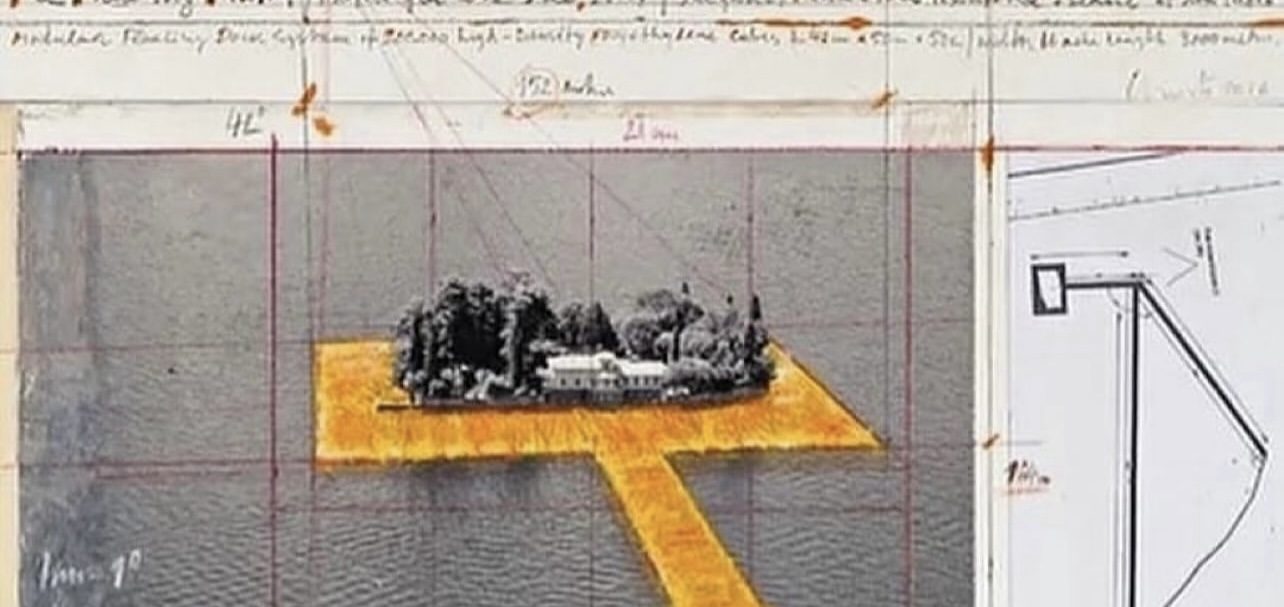
The Floating Piers, Christo and Jeanne-Claude, 2016. Courtesy of the artists.
History
Before the projects became visible, there were intentions, before the exhibitions, there were conversations, before the name, there was the work. This is the history that continues to move.
LAKE ISEO, ITALY
2016
The Floating Piers
A temporary installation connecting Sulzano, Monte Isola, and the island of San Paolo through three kilometers of floating walkways, The Floating Piers transformed Lake Iseo into a site of collective pilgrimage. Covered in saffron-colored fabric, the walkways created the physical sensation of walking on water — not through illusion, but through engineering, vision, and the radical trust that art can alter perception.
For sixteen days, more than one million visitors crossed this threshold between land and lake. The project functioned as both an artwork and an event, a shared encounter with scale, landscape, and the sublime. It offered no performance, no narrative, and no prescribed meaning: the act of walking became the artwork itself. Step after step, the surface shifted gently beneath the feet — a reminder that stability is never fixed, and that the world can be reimagined through gesture alone.
Christo and Jeanne-Claude’s temporary monuments have always been rooted in impermanence. Here, the principle remained absolute: after the project ended, every element was removed, dismantled, and recycled. What remained was not an object, but an experience — a memory held in the geography of those who crossed it.
In the history of contemporary art, The Floating Piers stands as a moment where infrastructure became poetry, engineering became choreography, and thousands of strangers became participants in a fleeting architecture. It was a work that appeared, existed fully, and then disappeared — a complete return to zero, proving that some of the most permanent things in art are the ones that do not remain.
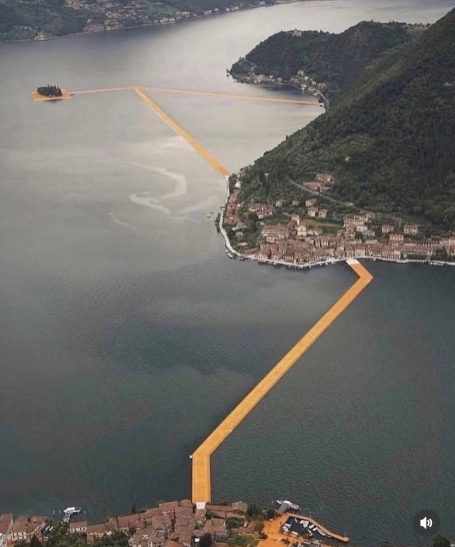
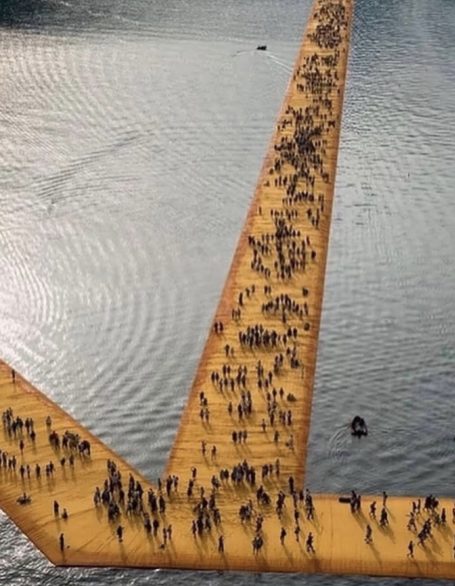
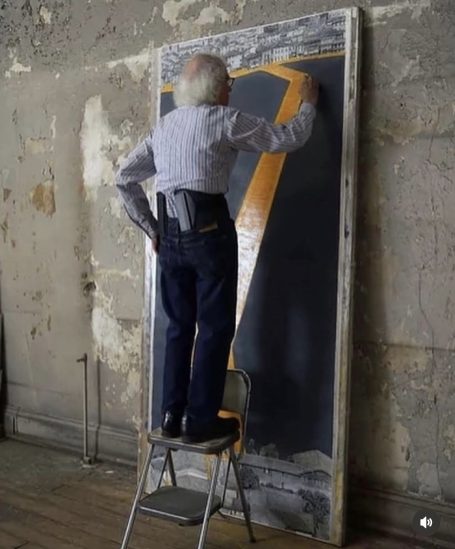
Images: Temporary installation, The Floating Pears, 2016. Courtesy of the artists. Photos by Wolfgang Volz and Studio MagGA.
GERHARD RICHTER
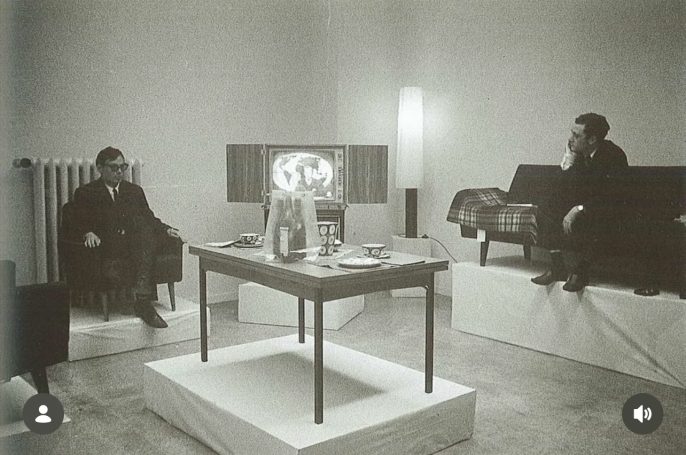
Between Image and Uncertainty
Is Gerhard Richter the greatest artist of our time, or simply the one who taught us to doubt the image itself? His work resists conclusion. Moving between painting and photography, precision and blur, figuration and pure abstraction, Richter dismantled the idea that art must choose a single position. Instead, he revealed that certainty is a construction — and that the act of seeing is already interpretation.
From the photo-based paintings of the 1960s to the color charts, grey monochromes, and later squeegee abstractions, Richter’s practice unfolds like a sequence of questions. Each body of work seems to contradict the previous one, as if he were pulling away every answer just before it becomes stable. In this sense, mastery is not presented as authority, but as a continuous unlearning. The image becomes a threshold: something we approach, but never fully possess.
Richter’s blurred paintings, often described as “doubt made visible,” refuse the certainty of photography while refusing the fantasy of pure painting. They occupy a space between recognition and disappearance — a reminder that memory itself is unreliable. His abstractions, created through layered gestures and erasures, extend this thought: nothing is final, every surface contains its own undoing. Perhaps Richter’s importance does not lie in declaring what art should be, but in opening the question of what art is allowed to be. He offers no manifesto, only the insistence that perception is not neutral — that to look is already to choose, to interpret, to misremember.
If there is greatness here, it may not be in mastery, but in the courage to let the image remain unstable. In a time that demands clarity, Richter returns us to the essential complexity of seeing.
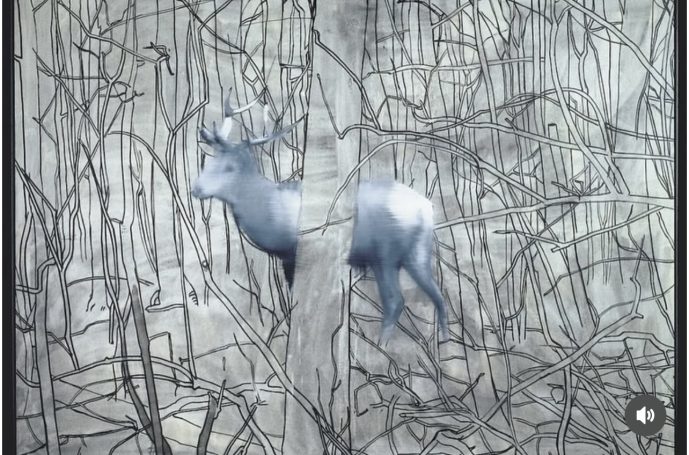
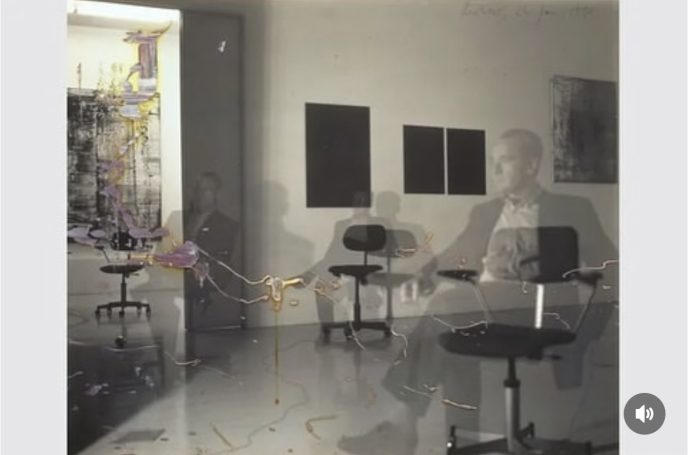
Images: (1) Reiner Ruthenbeck, photograph of "Living with Pop: A Demonstration for Capitalist Realism," a performance by Gerhard Richter and Konrad Lueg, 1963. Photo: Copyright © 2025 Artists Rights Society (ARS), New York/VG Bild-Kunst, Bonn. Courtesy of the Gerhard Richter Archive, Dresden. (2) Gerhard Richter, Deer, 1963. Photo: Copyright © Gerhard Richter 2025 (0115). (3) Gerhard Richter, Self-Portrait, Three Times, 1/24/90, 1990 © Gerhard Richter 2025 (01102025). Digital image © Copyright TATE, London/Art Resource, New York.
OSCAR NIEMEYER
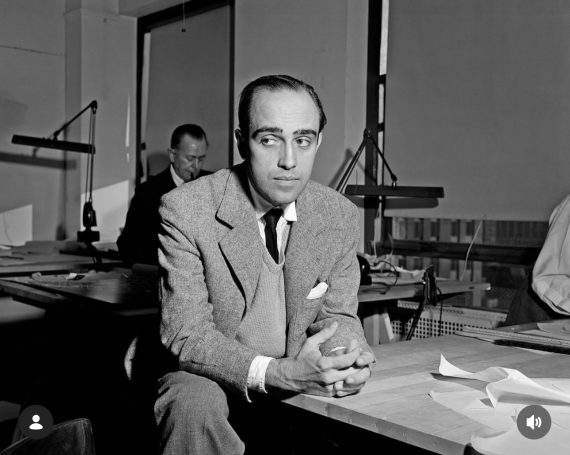
The Curve That Refused to Break
Oscar Niemeyer, the one who listened to the curve as if it were a living breath. An architect who drew the world with a single gesture — a line on a napkin, a soft rebellion against the straight edge. For Niemeyer, architecture was never geometry for its own sake; it was humanity translated into form. He believed that concrete could hold light, that buildings could move like bodies, and that structure could speak with the tenderness of a horizon.
“I am not attracted to right angles,” he once said. The straight line was the language of rigidity, of industry, of a world that insisted on control. The curve, instead, belonged to mountains, to rivers, to women, to wind — to life. And so he drew curves as if he were freeing space from discipline, giving cities a softness they didn’t know they could possess.
He carried Brazil in his heart — from Pampulha to Brasília — a utopia built not as memory, but as possibility. When exile arrived, he carried his vision instead. In France he found refuge, not retreat: the conversation with time continued, the pencil moving, the horizon widening. Across continents, the line never broke. Over seventy-eight years of practice and more than six hundred realized projects, Niemeyer remained a believer — in equality, in public space, in the sensual clarity of form that refuses hierarchy. His architecture was not monumental because of scale, but because of belief: the belief that creation can be both radical and gentle.
He gave us cities made of movement, structures that breathe, and a life that arced beyond a century — proof that when the gesture is honest, even concrete can defy gravity.
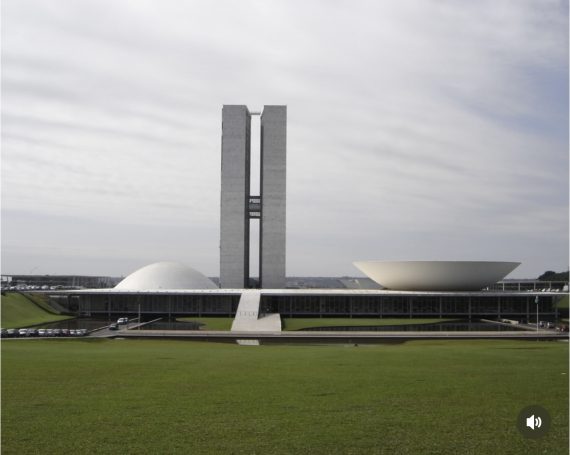
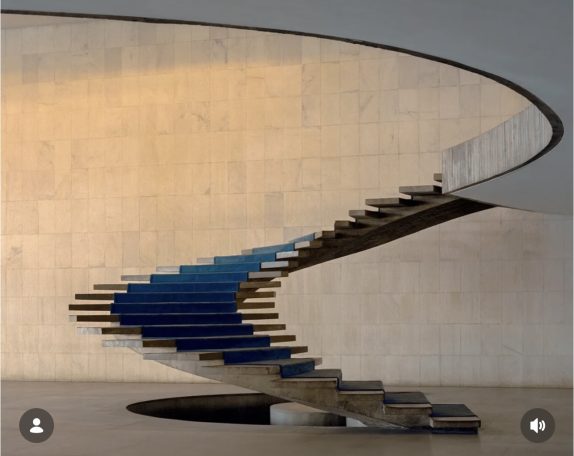
Photo credits: Todd Eberle
VENICE
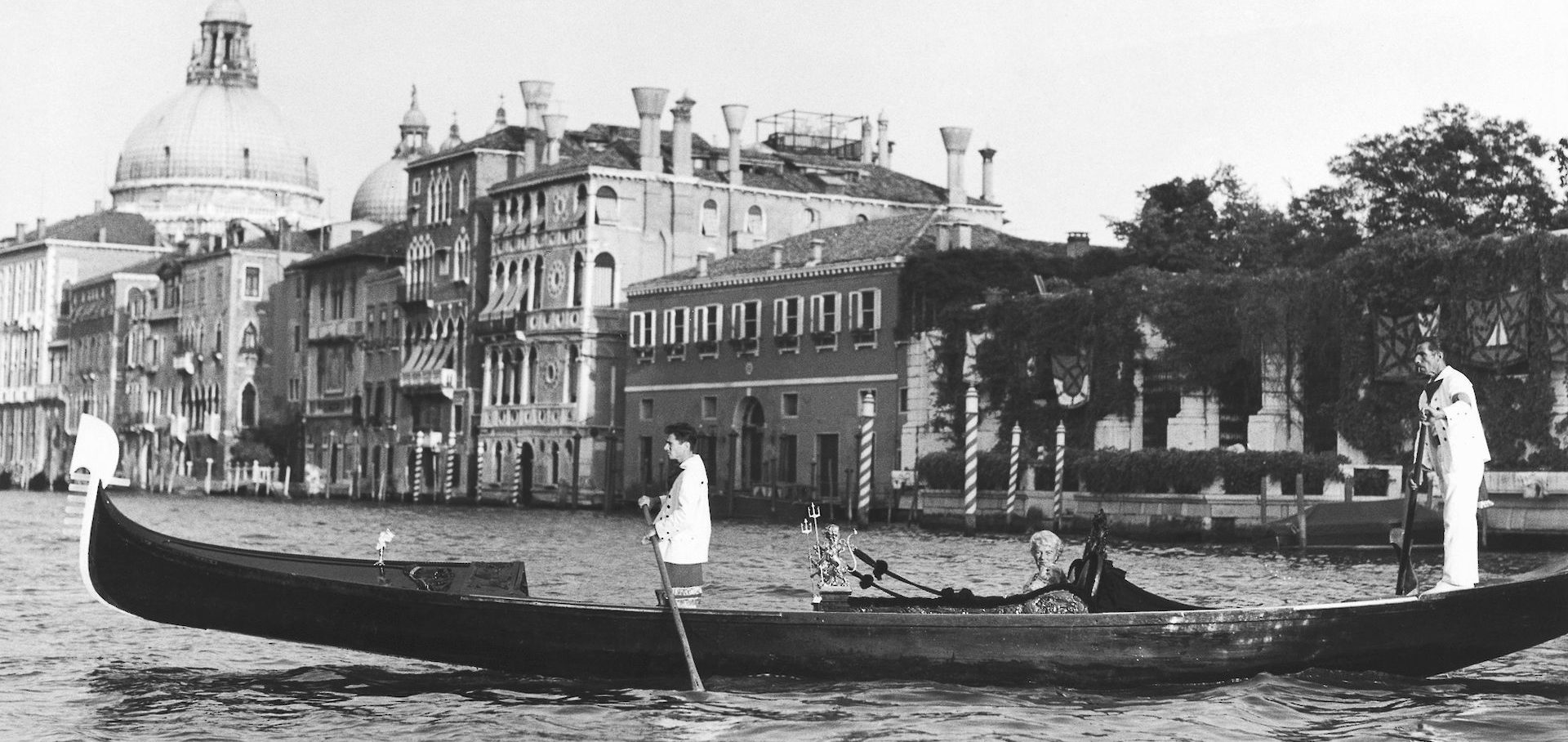
Image courtesy of Peggy Guggenheim Collection
Peggy Guggenheim Collection
In the labyrinth of Venice’s canals, there is a pavilion whose silence hums with memory — a structure once acquired from MoMA by the Peggy Guggenheim Collection not as an object, but as an ark for art. Here, under Venetian light that skims stone and metal like a whisper, students of craft come to remember what light feels like, as though illumination itself were a teacher.
This place does not merely house works — it opens with the generosity of a breath. It inhales history and exhales possibility.
After a long and careful selection, the US Department of State has entrusted this pavilion with a new voice for 2026: Utah-born, Mexico-based sculptor Alma Allen. Chosen to represent the United States at the Venice Biennale, Alma brings not only material mastery but a language of matter and breath that resonates with Peggy’s radical legacy. Commissioned by the American Arts Conservancy, under the stewardship of commissioner Jenni Parido and curator Jeffrey Uslip, the exhibition Alma Allen: Call Me the Breeze will be both an invocation and a continuum — a way for form to learn how to speak wind.
Peggy Guggenheim once said, “I am not an art collector. I am a museum.” In that statement lies her true architecture: not walls and floors, but a disposition — a space of becoming rather than possession. She refused to simply own art; she became the architecture that allowed art to live — its habits, its breath, its light.
In the story of this pavilion and the wind-sung forms of Alma Allen, we see a lineage — one where art is not an object locked away, but a presence ever-teaching, ever-opening. Here, we learn again what it means to be held by light.
JANNIS KOUNELLIS
Arte Povera
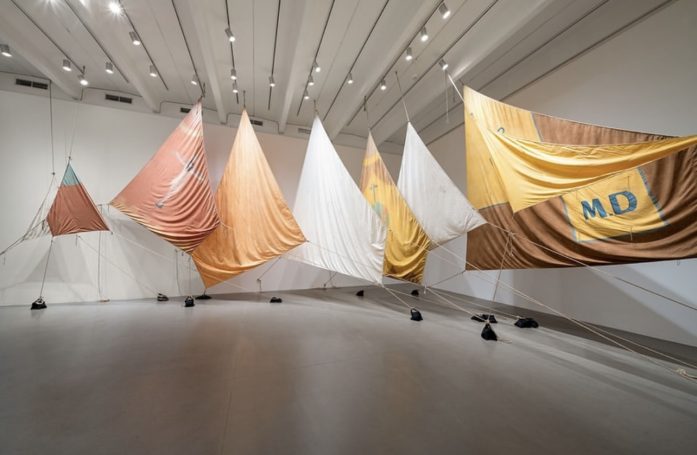
Considered one of the founding fathers of Arte Povera, over the last 40 years Jannis Kounellis has developed his own aesthetics around the concepts of place, weight, verticality and memory giving meaning and measure to a humanism removed from myth.
Rooted in the concepts of place, weight, verticality, and memory, Kounellis’s practice was not merely sculptural—it was architectural, theatrical, even spiritual. Each installation invited viewers to confront the presence of absence, the drama of material, and the tension between the ephemeral and the eternal. Rather than mythologize the human condition, Kounellis gave it form and mass, often evoking a humanism stripped of sentimentality and instead grounded in history, struggle, and silence.
In moving beyond traditional mediums and embracing the language of the everyday, Kounellis redefined the role of the artist—not as creator of objects, but as orchestrator of experiences. His legacy remains one of radical sincerity: a reminder that art, at its most powerful, can be both deeply personal and profoundly collective.
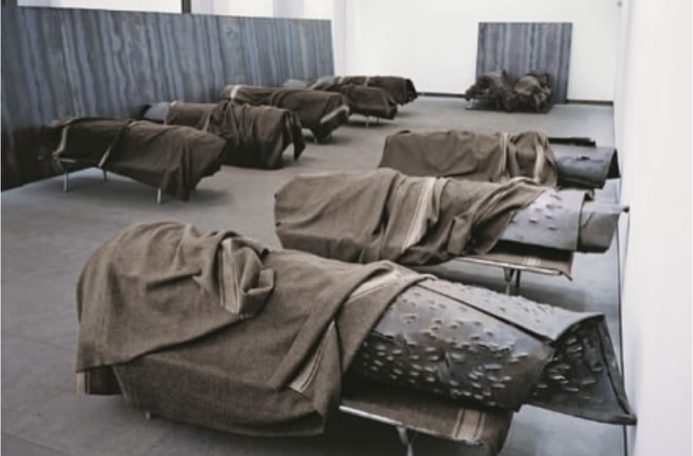
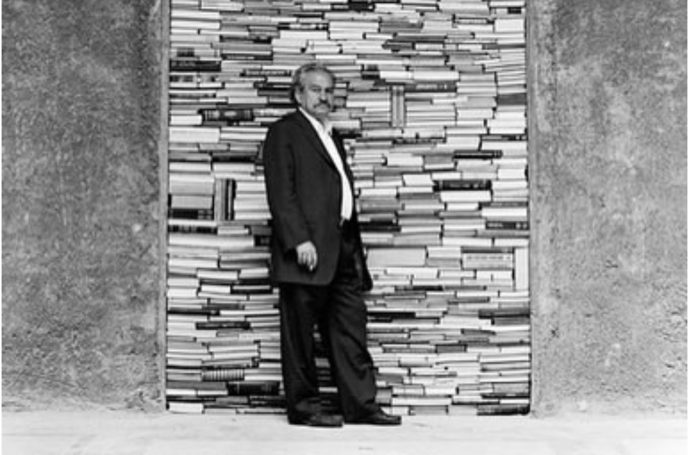
Photo credits: Aurelio Amendola, courtesy of Tramway, Glasgow.
ALBERTO GIACOMETTI
Louisiana Museum of Modern Art
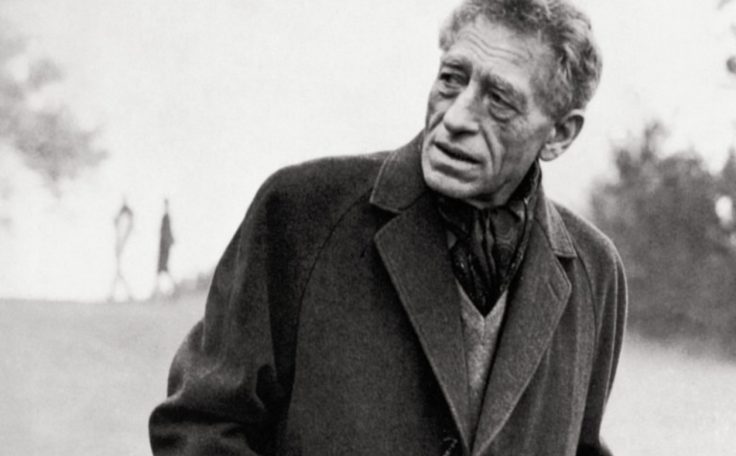
Just north of Copenhagen, the Louisiana Museum of Modern Art holds one of the most significant concentrations of Alberto Giacometti’s work anywhere in the world — not as a footnote, but as a core of its identity. Within the museum’s North Wing, Giacometti’s figures stand like sentinels: elongated bodies, rough surfaces, silhouettes caught between memory and distance. Their presence feels less like an exhibition and more like a threshold.
Louisiana’s architecture — the glass corridors, the measured rhythm of Jørgen Bo and Vilhelm Wohlert’s design — becomes a quiet stage for Giacometti’s sculptures. Natural light from the Øresund settles onto each form as if time itself pauses to observe them. Works from the sculptor’s Surrealist period lead into pieces that feel like relics of a vanished civilization, or witnesses to a world yet to come. They echo with the texture of Etruscan earth and the anxiety of the 20th century, bridging ancient memory and modern existentialism.
Here, Giacometti is not merely displayed — he is situated. The Louisiana collection allows his work to breathe in architectural space; the sculptures extend their thin, trembling lines into the landscape and return as questions. Who are we, when reduced to essence? What remains, when form and identity are stripped to their core?
In Louisiana, Giacometti’s oeuvre becomes a living dialogue between sculpture, architecture, and the horizon — a place where history is not archived, but endured.
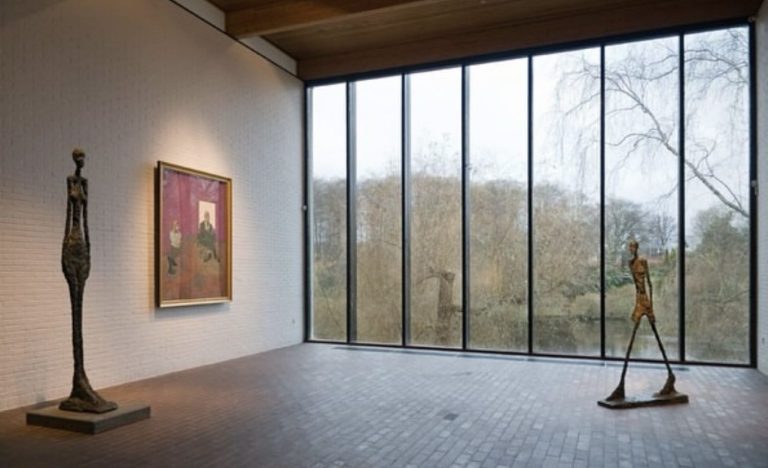
Image courtesy of Louisiana Museum of Modern Art.