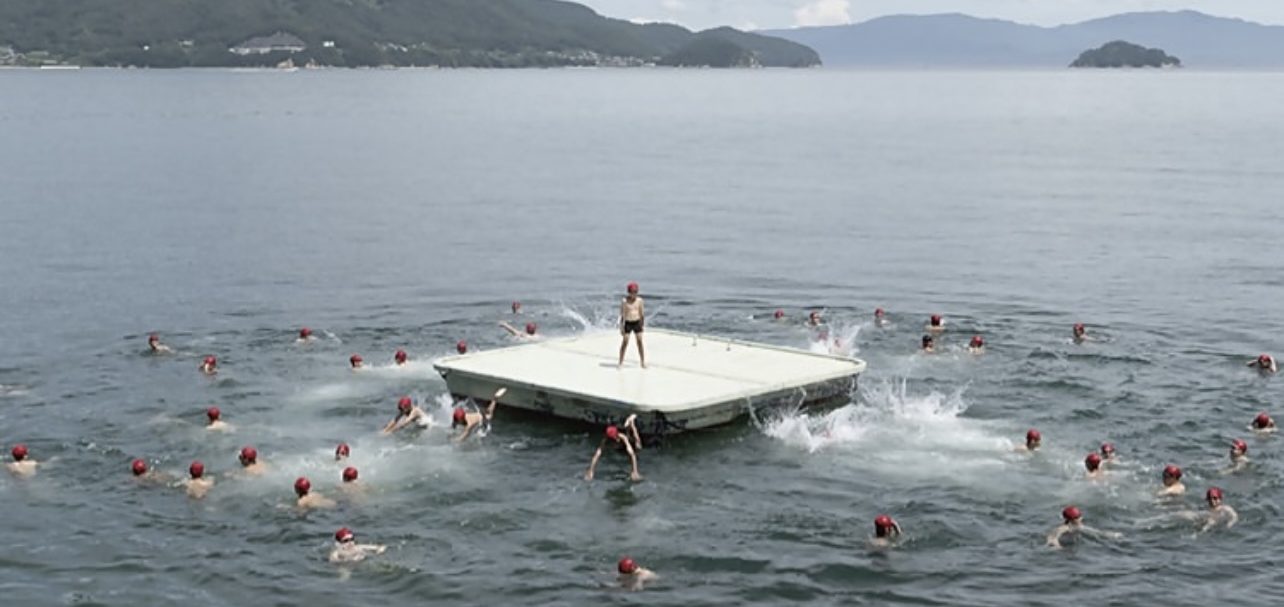
Image courtesy of Setouchi Triennale 2025. © All righta reserved.
Archive – Past in Presence
In the Archive section, we present a selection of past exhibitions and events from the contemporary art world initiated and organized by RFA Projects, while others emerge through close collaboration with leading museums, partners, biennales, and cultural institutions worldwide. Additional exhibitions are included as reference points, illustrating the range of contexts and possibilities in which artists may position their work. Our role is to connect artistic vision with the appropriate context, enabling works to reach significant audiences and resonate within the global art discourse.
SETOUCHI TRIENNALE 2025
April 18, 2025 – November 9, 2025
Across Islands and Cities
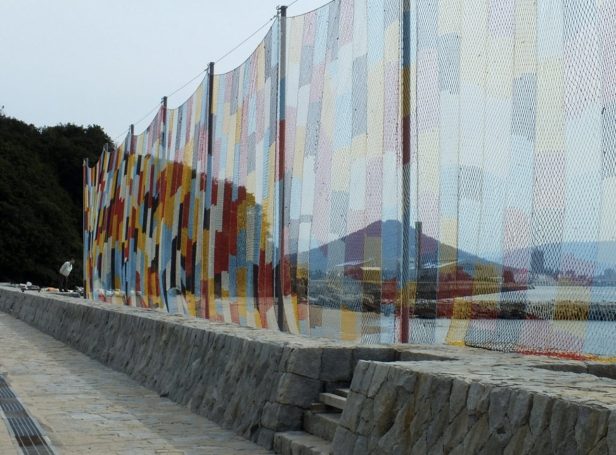
Across the islands and shores of the Seto Inland Sea, Setouchi Triennale 2025 unfolded as a constellation of art, landscape, and lived time. Rooted in place yet open to the world, the triennale transformed coastal villages, ports, and pathways into sites of encounter—where contemporary voices met ancient rhythms, and art moved at the pace of the sea.
During Setouchi Triennale 2025, we presented and displayed several artists across diverse locations in Setouchi, Osaka, and Tokyo, in close collaboration with our partners. These parallel presences extended the triennale’s spirit beyond its geographic core, creating a fluid network of exhibitions, dialogues, and shared gestures across Japan.
This archive gathers traces of those moments—works shown, spaces activated, collaborations formed—preserving not only what was seen, but what resonated. A record of movement, exchange, and light, carried from island to city, and held in memory.
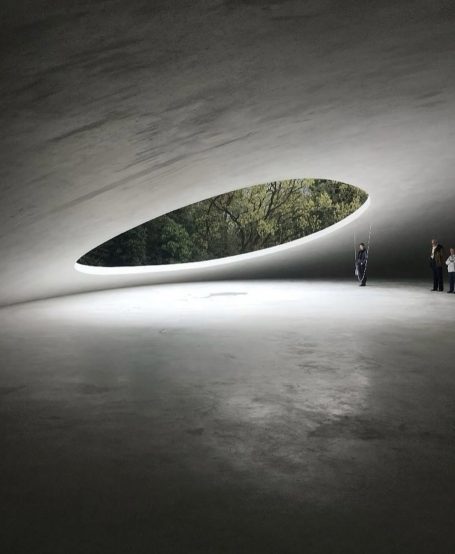
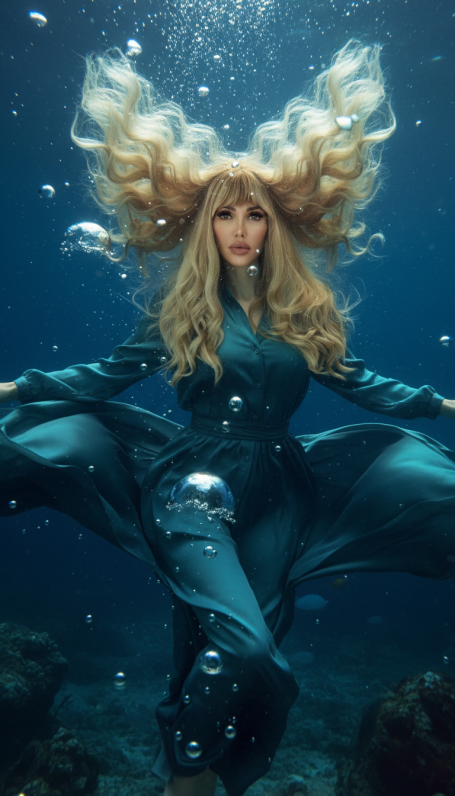
Images: Sora-Ami: Knitting the Sky, Installation view on Shamijima Island. (2) Teshima Art Museum, Island Teshima. (3) Lavinia de Rothschild, Restoration of the Sea, 2025. All images are courtesy of the artists and Setouchi Triennale © All rights reserved.
MEAM BARCELONA
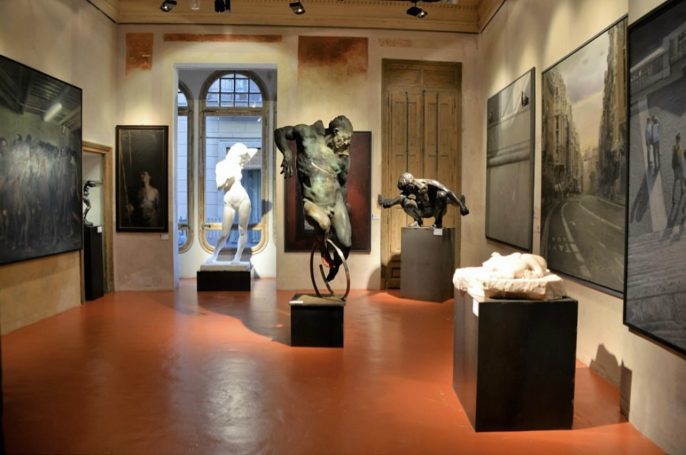
September 18–21, 2025
European Museum of Contemporary Art
From 18–21 September 2025, the group exhibition at the Museu Europeu d’Art Modern (MEAM) in Barcelona offered a vivid testament to the enduring power of figurative art. Bringing together a selection of contemporary artists whose practice reinterprets the human form for a new generation, the exhibition underscored MEAM’s commitment to celebrating the intimate, the psychological, and the expressive dimensions of painting and sculpture today.
Among the works presented, the featured artist’s paintings captured subtle emotional states through precise, delicate brushwork, revealing an intimacy that resonates with the viewer. Her oeuvre, celebrated for its quiet realism and psychological depth, found a natural home within MEAM’s galleries—spaces designed to foreground the human presence in all its complexity and nuance. Across the exhibition, gestures, gazes, and forms coalesced to invite reflection on what it means to inhabit the world as both observer and observed, tracing the line between classical mastery and contemporary sensibility.
Founded in 2011, the Museu Europeu d’Art Modern stands as Spain’s first institution dedicated exclusively to contemporary figurative art. Located in the beautifully restored Palau Gomis in the heart of El Born, MEAM bridges centuries of artistic tradition with the pulse of modern vision. Its galleries, suffused with the memory of history and the energy of present creation, provide a setting where the mastery of technique meets bold contemporary ideas. By privileging the human figure, MEAM resists the dominance of abstraction and conceptual trends, creating a sanctuary for works that affirm the enduring resonance of craft, form, and emotional truth.
The September 2025 exhibition exemplified this mission, connecting classical skill with modern exploration. Across MEAM’s galleries, visitors encountered a dialogue between the precision of technique and the intimacy of narrative, between heritage and innovation. The exhibition not only celebrated the featured artists’ contributions to contemporary figurative practice, but also reaffirmed MEAM’s position as a platform for artistic voices that seek to reconcile the weight of tradition with the possibilities of the present.
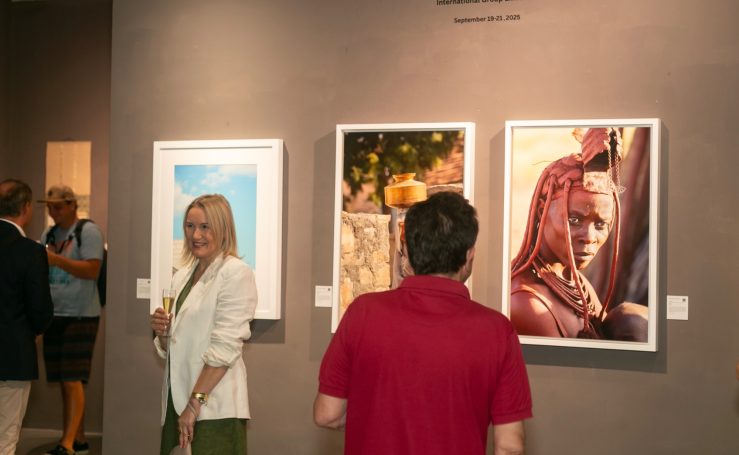
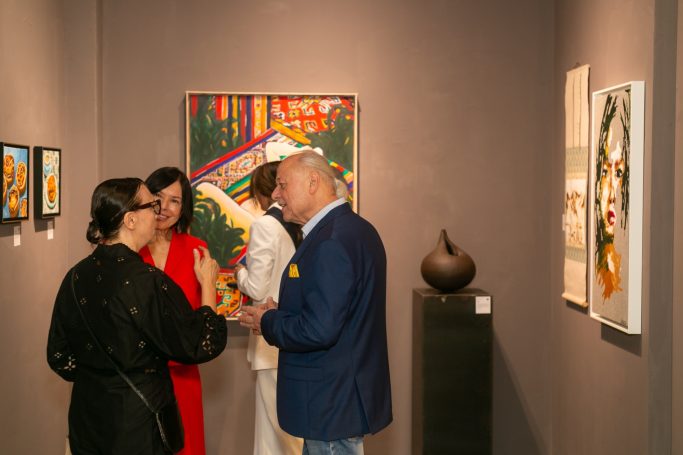
Images: (1) Photo courtesy of MEAM. (2) and (3) Photo: Artio.
ART WEEK TOKYO 2025
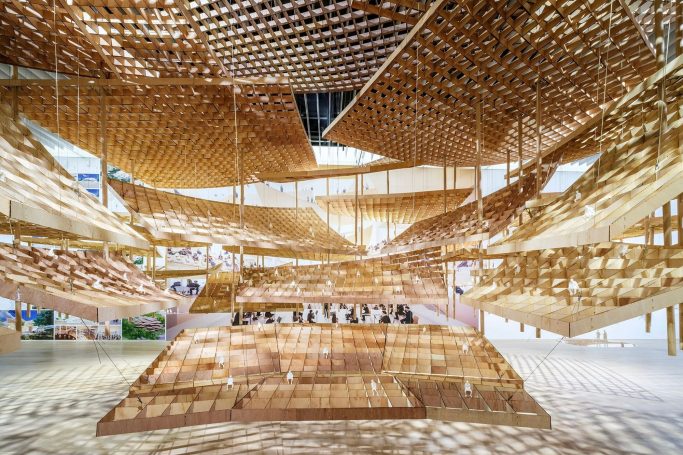
November 5–9, 2025
Traces of Art in Motion
Across the vibrant streets and elevated towers of Tokyo, Art Week Tokyo 2025 unfolded as a constellation of contemporary practice, architecture, and urban rhythm. Rooted in the city yet attentive to global currents, the week transformed galleries, public spaces, and unexpected corners into sites of encounter—where artists, audiences, and ideas converged in dialogue, and art moved with the pace of the metropolis.
During Art Week Tokyo 2025, we presented and collaborated with several artists across diverse venues and billboards in Tokyo, in close partnership with local institutions, and cultural platforms. These parallel presences extended the city’s pulse, creating a fluid network of exhibitions, interventions, and shared gestures that wove through Tokyo’s neighborhoods.
This archive gathers traces of those moments—works presented, spaces activated, collaborations formed—preserving not only what was seen, but what resonated. A record of movement, exchange, and light, carried through streets and skylines, and held in memory.
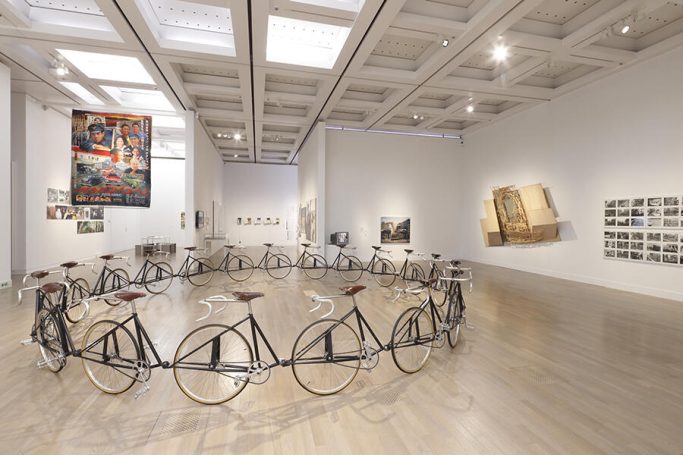
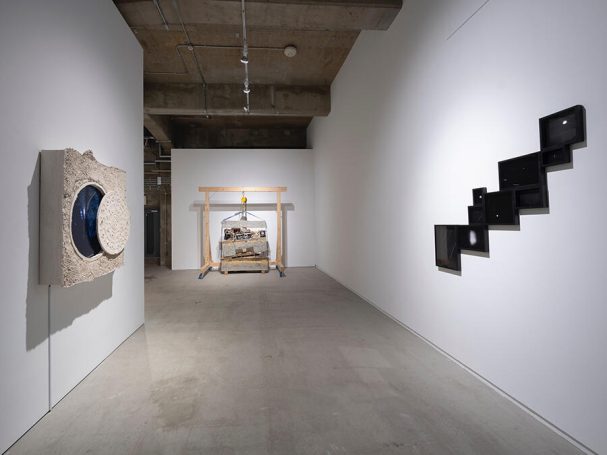
Images: (1) Installation view of Sou Fujimoto's Primordial Future Forest at the Mori Art Museum, 2025. Photo by YashiroTetsuya, courtesy of Mori Art Museum. (2) Exhibition view, Prism of the Real: Making Art in Japan 1989–2010, 2025, courtesy of National Art Center Tokyo. (3) Exhibition view of Chim Pom from Smappa Group, A Hole Within a Hole Within a Hole, 2025, courtesy of Anomaly. © All rights reserved.
HELSINKI BIENNALE 2025
June 8 – September 21, 2025
Shelter: Below and Beyond
Helsinki Biennial 2025 closed the summer not with silence, but with resonance. A resonance measured not only in numbers—568,000 visitors—but in footsteps across islands, pauses in parks, and moments of attention held between sea and sky. From the raw, untamed landscape of Vallisaari to the ordered openness of Esplanade Park, contemporary art unfolded as a living current, woven into the daily rhythm of the city.
This edition of the Biennial dissolved the boundaries between exhibition and environment. Art did not demand enclosure; it breathed with the terrain. On the island, works stood in dialogue with wind, stone, and saltwater—exposed, vulnerable, and alive. In the museum, reflection deepened. In the park, art encountered passersby not as spectators, but as participants. The city itself became a porous exhibition space, where culture met life without hierarchy.
What distinguished Helsinki Biennial 2025 was not spectacle, but presence. The works did not seek to dominate the landscape; they listened to it. Time slowed. Attention sharpened. Visitors were invited to move differently—to walk, to wait, to look again. In this way, the Biennial offered something increasingly rare: a collective experience of awareness.
As Director Arja Miller reflects, the mission was clear and fulfilled—to make art present, visible, and alive in Helsinki. This visibility was not loud, but luminous. Art appeared where it was least expected and most needed: along paths, among trees, beside the water. It became part of the city’s pulse, syncing with everyday movement while subtly reshaping perception.
Helsinki now stands with quiet confidence as a cultural beacon of Northern Europe. Not through grandeur, but through coherence—between nature and culture, public space and artistic vision. The Biennial affirmed that contemporary art can be both rigorous and accessible, rooted and expansive.
As summer closed, what remained was not an ending, but an afterimage: the sense that art had temporarily altered the city’s internal architecture. That it had opened a space—mental, physical, collective—where new ways of seeing could take hold.
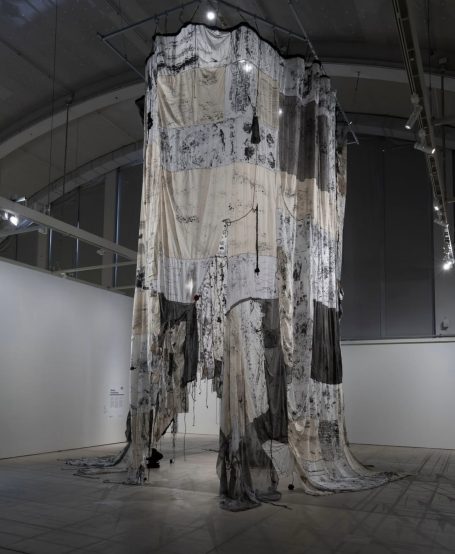
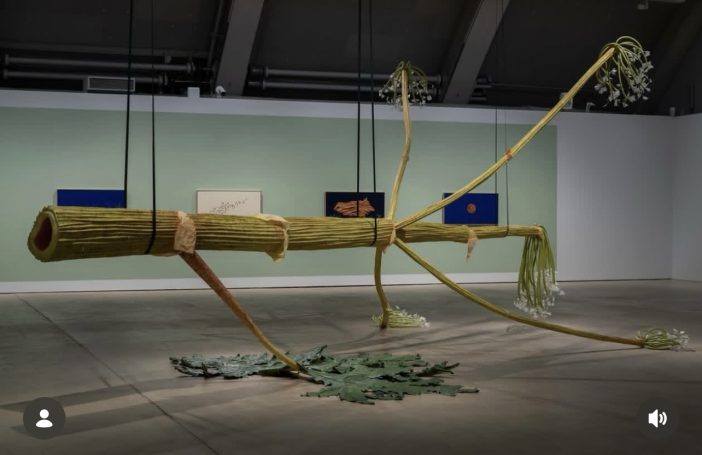
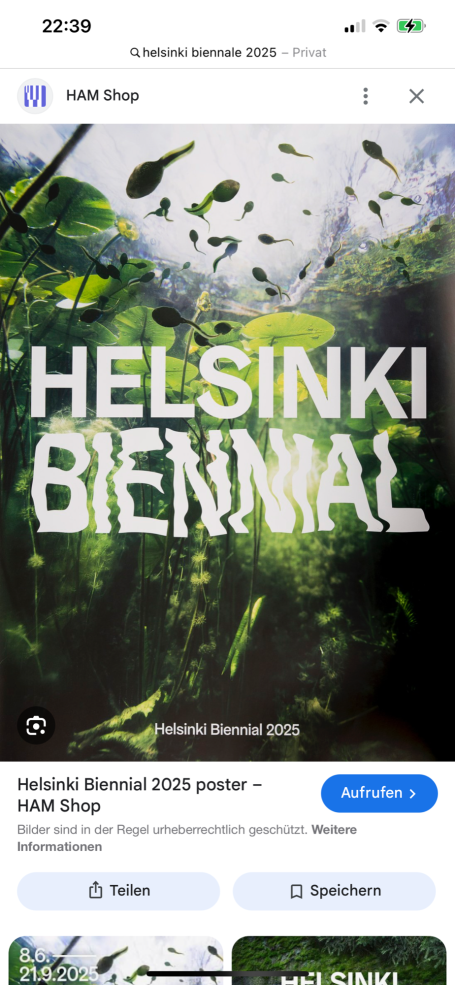
Images: (1) Poster Helsinki Biennial 2025, courtesy of HB. (2) Installation view Sky Skin, Sissel M. Bergh, courtesy of the artist. (3) Ingela Ihrman, The Giant Hogweed, courtesy of artist.
XV FLORENCE BIENNALE 2025
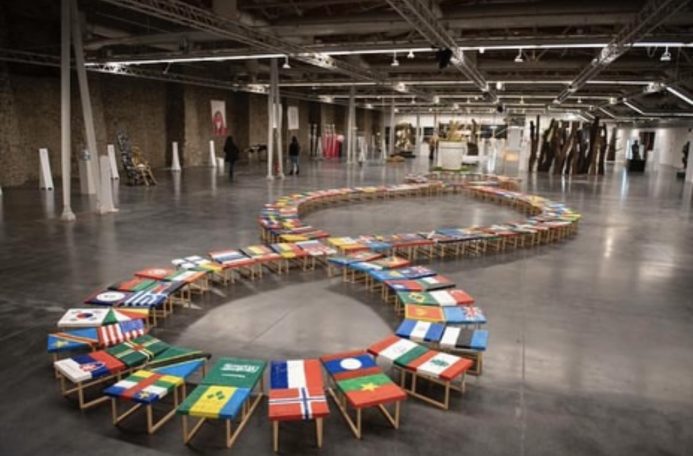
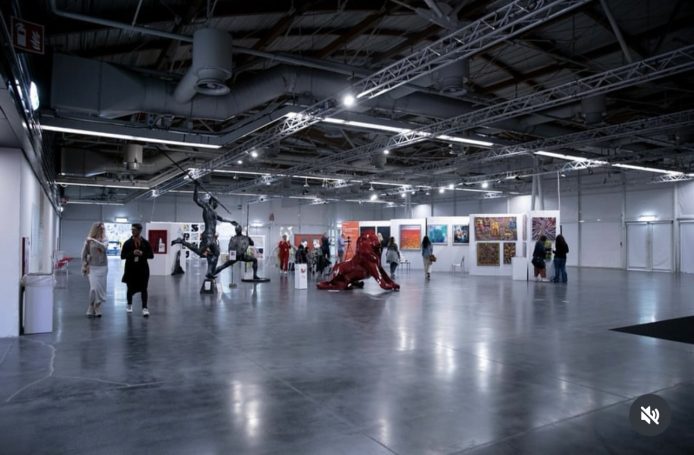
Images: (1) Installation view, Preventive Peace, Michelangelo Pistoletto at Palazzo Reale, 2023. Courtesy of the artist and Florence Biennale: (2) Exhibition view, Fortezza da Basso, courtesy of Florence Biennale.
October 18 – 26, 2025
Fortezza da Basso
The XV Florence Biennale — the 15th International Exhibition of Contemporary Art and Design — took place from October 18 to 26, 2025, at the historic Fortezza da Basso in Florence, Italy. As one of the most significant global gatherings of contemporary culture, this edition brought together over 550 artists and designers from more than 85 countries, presenting more than 1,500 works across painting, sculpture, photography, multimedia, installation, design, and hybrid practices.
Under the curatorial theme “The Sublime Essence of Light and Darkness: Concepts of Dualism and Unity in Contemporary Art and Design,” the Biennale positioned itself as a platform for probing the foundational dichotomies of human perception and artistic expression. The theme invited reflection on how opposing forces — light and darkness, presence and absence, harmony and tension — coexist not as binaries but as intertwined phenomena that shape our understanding of reality, aesthetics, and cultural dialogue.
A major highlight of the 2025 Biennale was the conferment of the “Lorenzo il Magnifico” International Lifetime Achievement Award to American filmmaker and visual artist Tim Burton. Recognized for his distinctive cinematic and artistic vision, Burton’s work consistently challenges traditional perceptions by embracing the interplay of contrast — light and shadow, the uncanny and the poetic — as core components of creative expression. The award ceremony took place on October 21, 2025, at the theatre area within the exhibition spaces, acknowledging Burton’s profound influence on contemporary visual culture.
The XV Florence Biennale 2025 reaffirmed the event’s role as a rigorous, internationally respected forum for critical artistic engagement — one where the intersection of conceptual inquiry and aesthetic innovation continues to shape the global cultural landscape.
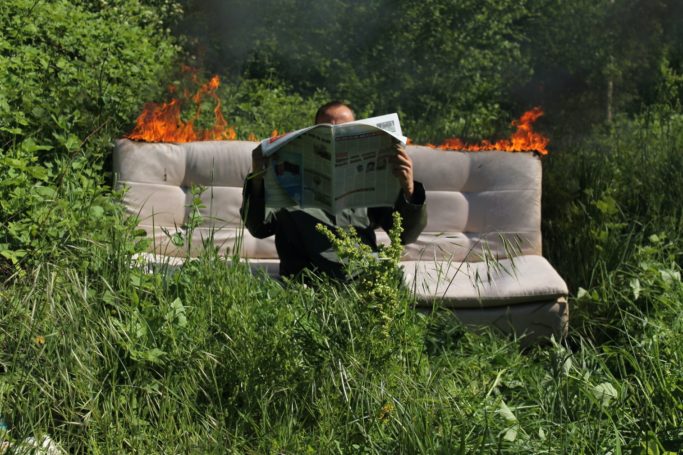
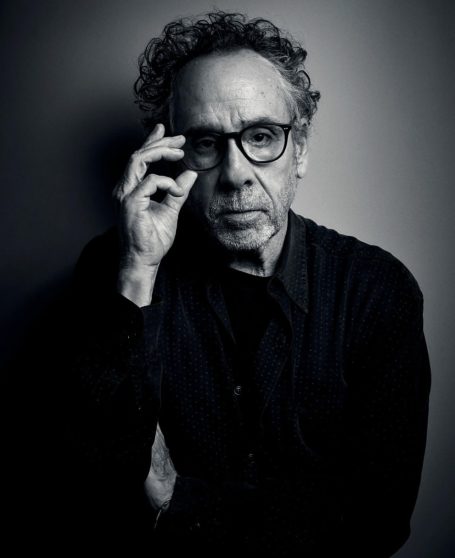
Images: (1) Lavinia de Rothschild, The Comfort of Collapse, at Florence Biennale 2025. (2) Tim Burton, Lifetime Achievement Award at the XV Florence Biennale 2025. Photo: Steve Schofield. All images are courtesy of the artists and Florence Biennale © All rights reserved
DOCUMENTA ARCHIVE
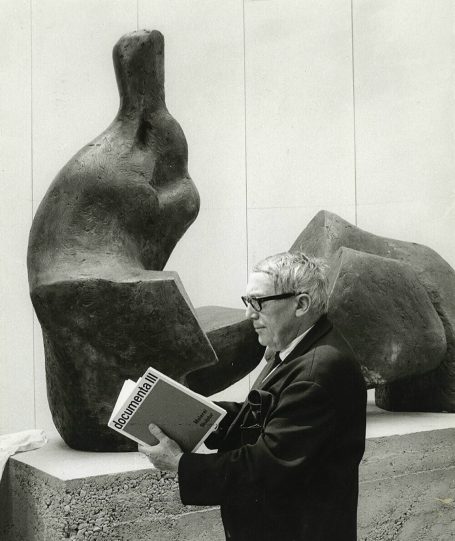
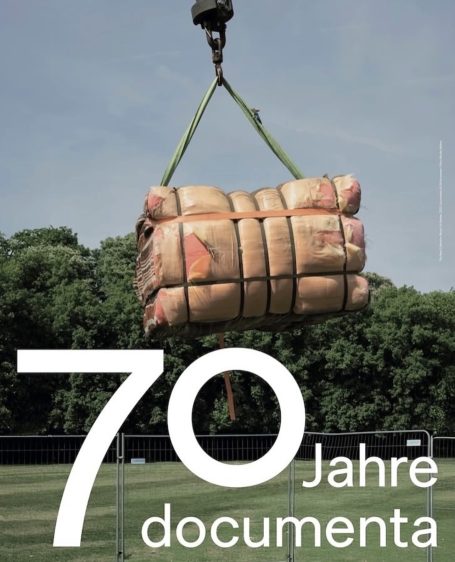
Images: December 23, 2025, marks the 125th anniversary of Arnold Bode's (1900 – 1977) birth. Photo: Stadtarchiv Kassel / Carl Eberth / VG Bild-Kunst, Bonn. (2) Marking 70 years since its founding in 1955, dOCUMENTA stands as one of the most influential platforms for contemporary art. The Nest Collective, Return to Sender, 2022, documenta 15. Photo: Nicolas Wefers. © documenta
Archive as a Living Memory
An archive is not storage. It is a living memory, breathing through paper, image, and trace — a continuity that refuses to disappear. Within its walls, history is not merely preserved; it is activated. Pages rustle like arteries, photographs bear the pulse of a moment, and documents become the architecture of remembrance.
The documenta archiv, rooted in the vision of Arnold Bode and formally established in 1961, carries this mandate with clarity and responsibility. It safeguards the afterlife of documenta — not only the exhibitions themselves, but the ideas that shaped them and the ruptures they introduced. Since the first edition in 1955, documenta has returned like a heartbeat in contemporary art: every five years, a new inquiry, a new fracture, a new horizon. Here, those pulses are gathered and held in resonance.
Manuscripts, curatorial correspondence, models, catalogues, photographs, and ephemera form a topography of memory. Together, they reveal how exhibitions are built, how they are challenged, and how they endure. This is not a closed vault; it is a public space of research and reflection. Scholars, artists, students, and visitors enter to learn not only what happened, but how artistic knowledge constructs itself — how art remembers, corrects, and reinvents.
The archive is, ultimately, an act of light: a place where memory does not dim, but sharpens. A site where the past gathers in order to speak again.
THE METROPOLITAN MUSEUM NEW YORK
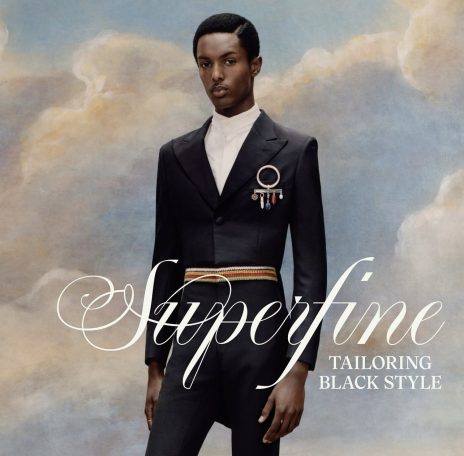
Image courtesy of Met Museum, New York
May 10 – October 26, 2025
Gallery 999
“Superfine: Tailoring Black Style” unfolds as a cartography of elegance, resistance, and self-authorship across the Black Atlantic diaspora. Presented at The Metropolitan Museum of Art, the exhibition traces how style—particularly tailoring—has functioned not merely as adornment, but as a language through which identity, power, and dignity are asserted and reimagined.
Spanning from the 18th century to the present, the exhibition brings together historical garments, contemporary fashion, artworks, and archival material to reveal how Black communities have used dress as both shield and signal. In societies shaped by enslavement, colonialism, and systemic exclusion, clothing becomes a site of negotiation: between visibility and protection, assimilation and refusal, elegance and defiance.
At the heart of Superfine is the concept of “superfine” itself—a term historically associated with high-quality cloth and refined tailoring. Here, it is reclaimed as a metaphor for precision, intention, and mastery. Tailoring emerges as an act of authorship, where the cut of a jacket, the line of a trouser, or the choice of fabric communicates self-determination and cultural continuity. Style becomes structure; beauty becomes strategy.
The exhibition maps the evolution of Black sartorial expression across geographies and generations: from early formalwear shaped by European conventions to the radical reconfigurations of dress in the 20th and 21st centuries. Zoot suits, bespoke tailoring, street style, and contemporary fashion practices appear not as isolated moments, but as part of a continuous visual and political conversation. Each silhouette carries histories of migration, resilience, and reinvention.
“Superfine” also foregrounds the social life of clothing—how garments circulate through communities, ceremonies, music, and protest. Dress codes become codes of belonging; style becomes a form of cultural memory. Through this lens, fashion is revealed as a living archive, one that records aspirations as much as constraints.
At Gallery 999, Superfine: Tailoring Black Style invites viewers to read clothing as text and tailoring as theory. It is an exhibition that honors the intelligence embedded in style and recognizes self-presentation as an art form shaped by history, resistance, and imagination. Here, elegance is not excess—it is evidence.
VENICE – PALAZZO ALBRIZZI-CAPELLO
March 21 – April 4, 2025
Eras converge, time illuminates
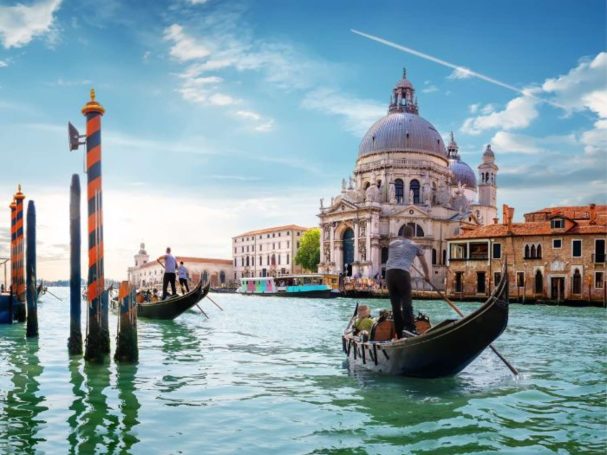
Art moves beyond linear time, folding past and future into a single, resonant narrative. During the 21st edition of the Venice International Art Exhibition, from 21 March to 4 April 2025, visionary contemporary practices inhabited the historic halls of Palazzo Albrizzi-Capello in Venice.
Set within the grandeur of a sixteenth-century landmark, the exhibition reimagined tradition through a contemporary lens. Once a residence of Venetian nobility and now a beacon of intercultural exchange, Palazzo Albrizzi-Capello has long served as a stage for eminent international art events, including national pavilions of the Venice Biennale.
Within this charged architectural memory, posthuman inquiries unfolded—engaging the past while probing the limits of identity, technology, and transformation. Alongside the broader curatorial framework led by the event’s principal organizer, we accompanied a selection of artists, presenting their work, in dialogue with the exhibition as a whole.
The encounter between ancient walls and forward-looking ideas created a space where eras converged, inviting visitors into a dialogue that was both reflective and radically current.
Palazzo Albrizzi‑Capello is a historic Renaissance palace in Venice’s Cannaregio district, with origins in the 16th century and a long lineage tied to Venetian noble families. Originally a private residence, the building is today an active cultural venue managed by the Associazione Culturale Italo‑Tedesca (ACIT Venice), one of Europe’s significant Italo‑German cultural organizations. Under ACIT’s stewardship, the palace hosts temporary art exhibitions, cultural events, conferences, concerts, and collaborations with local and international institutions — often engaging with major art events like the Venice Biennale.
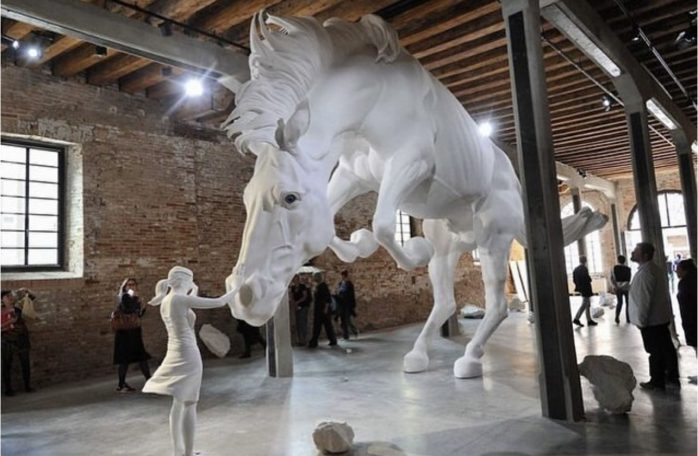
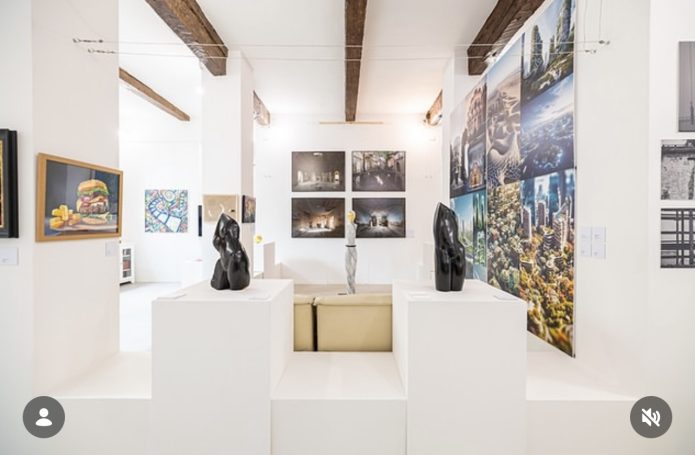
Images: (1) Photo: Context (2) Installation view 57th Venice Biennale, Argentinian Pavillon (curator Andrés Duprat), courtesy of the artist. (3) Exhibition view, Palazzo Albrizzi-Capello. Courtesy of Liquid.